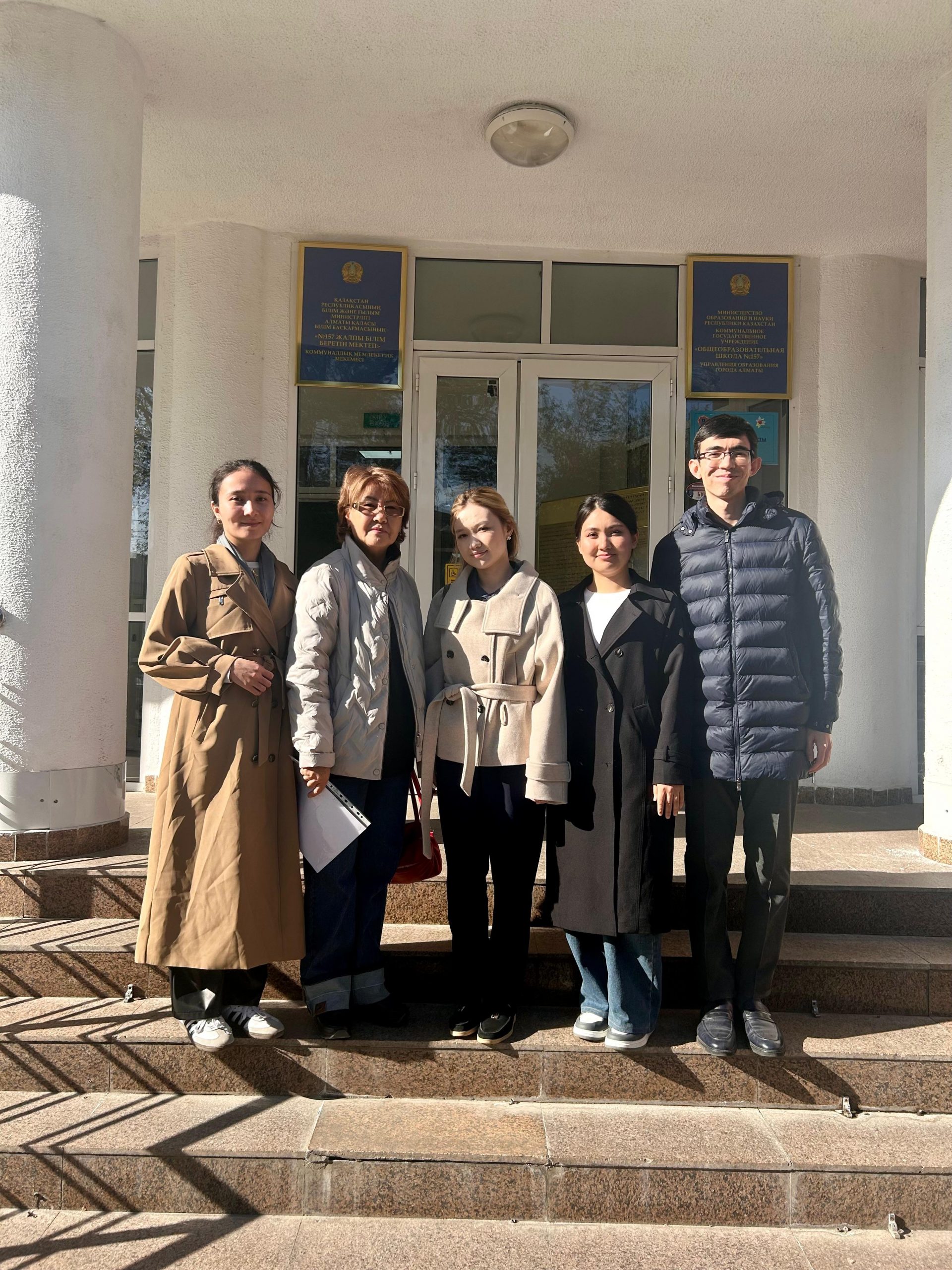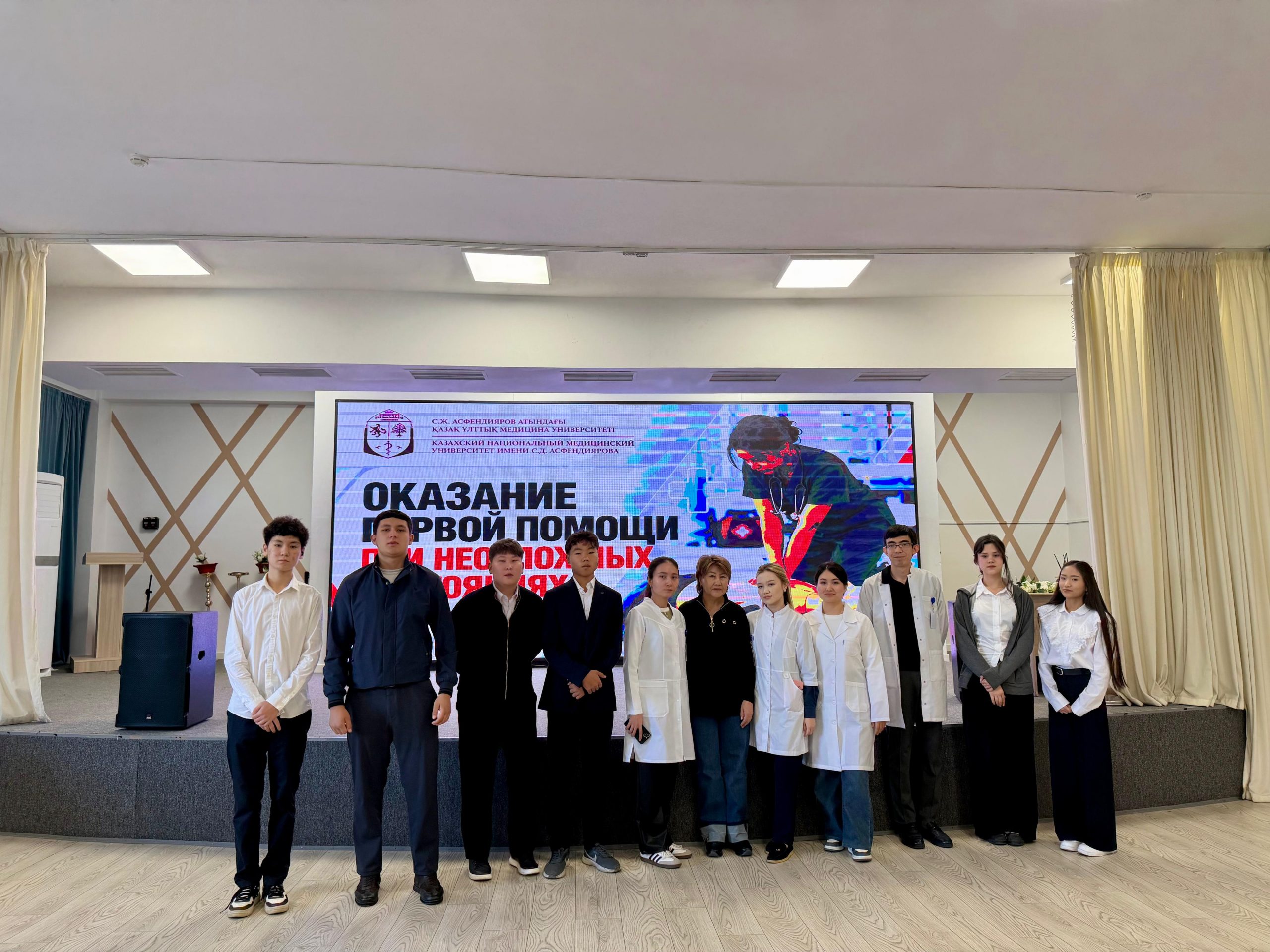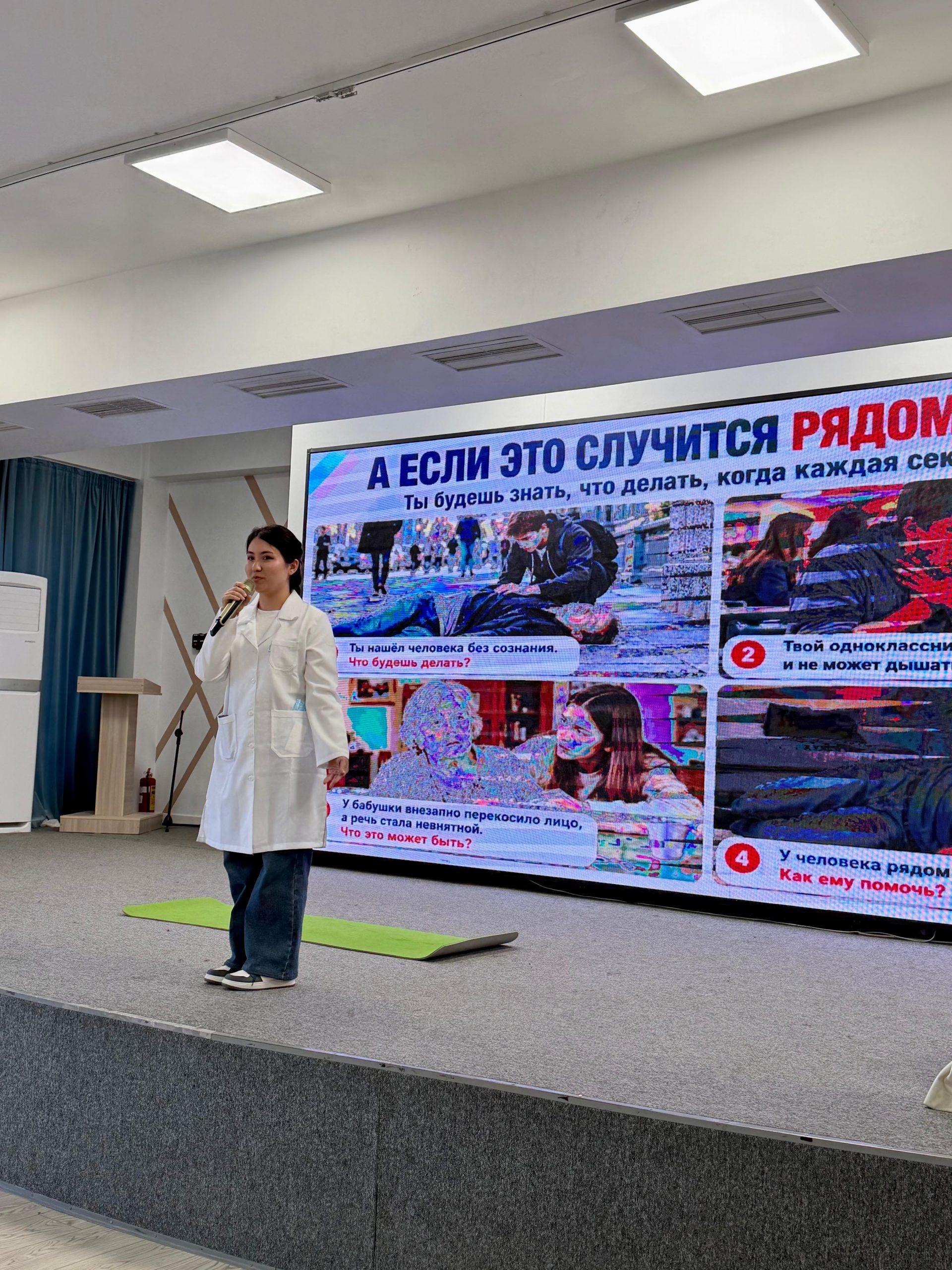
First-year residents of the Department of Nervous Diseases at S. D. Asfendiyarov Kazakh National Medical University (KazNMU), as part of their volunteer and public health education activities, delivered an educational lecture on first aid for students of Secondary School No. 157 in Almaty. Approximately 200 schoolchildren participated in the event.
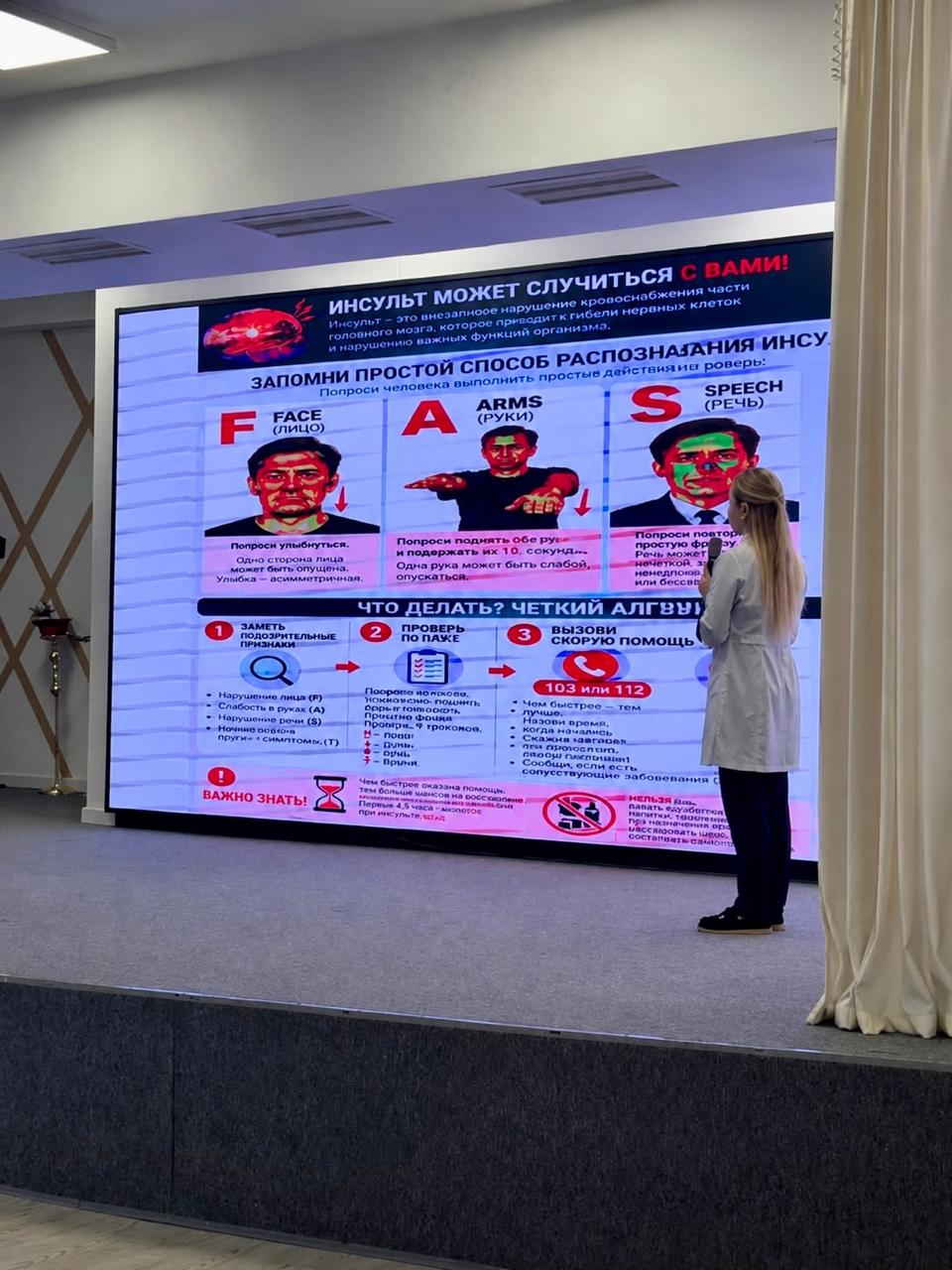
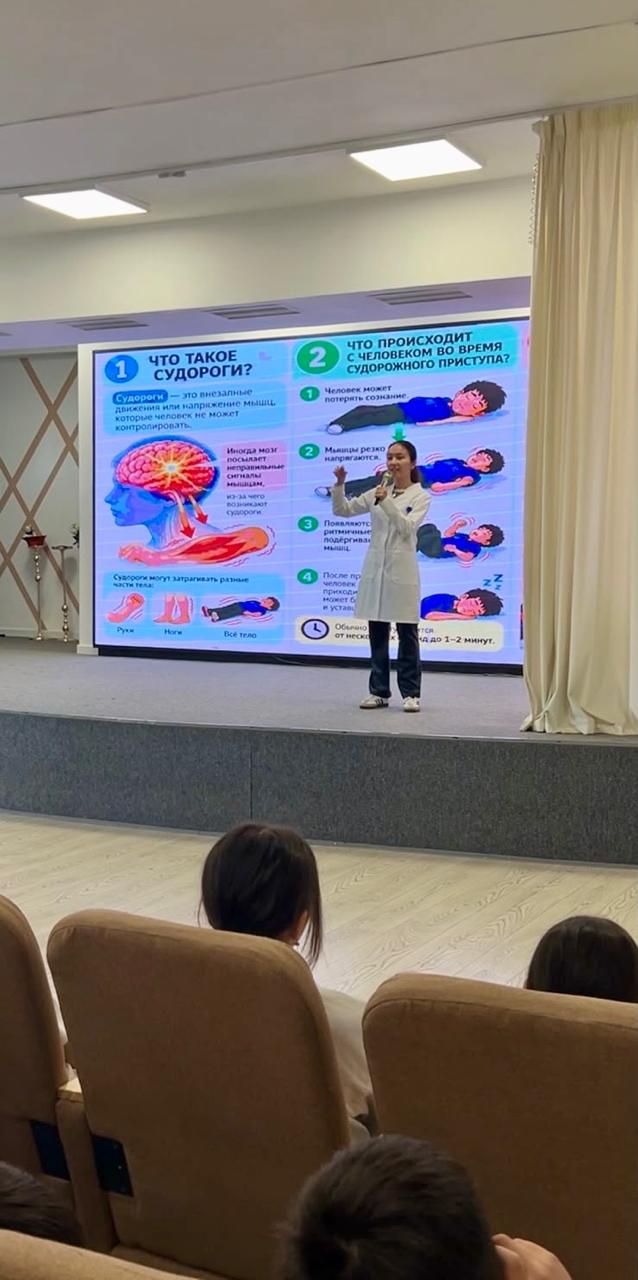
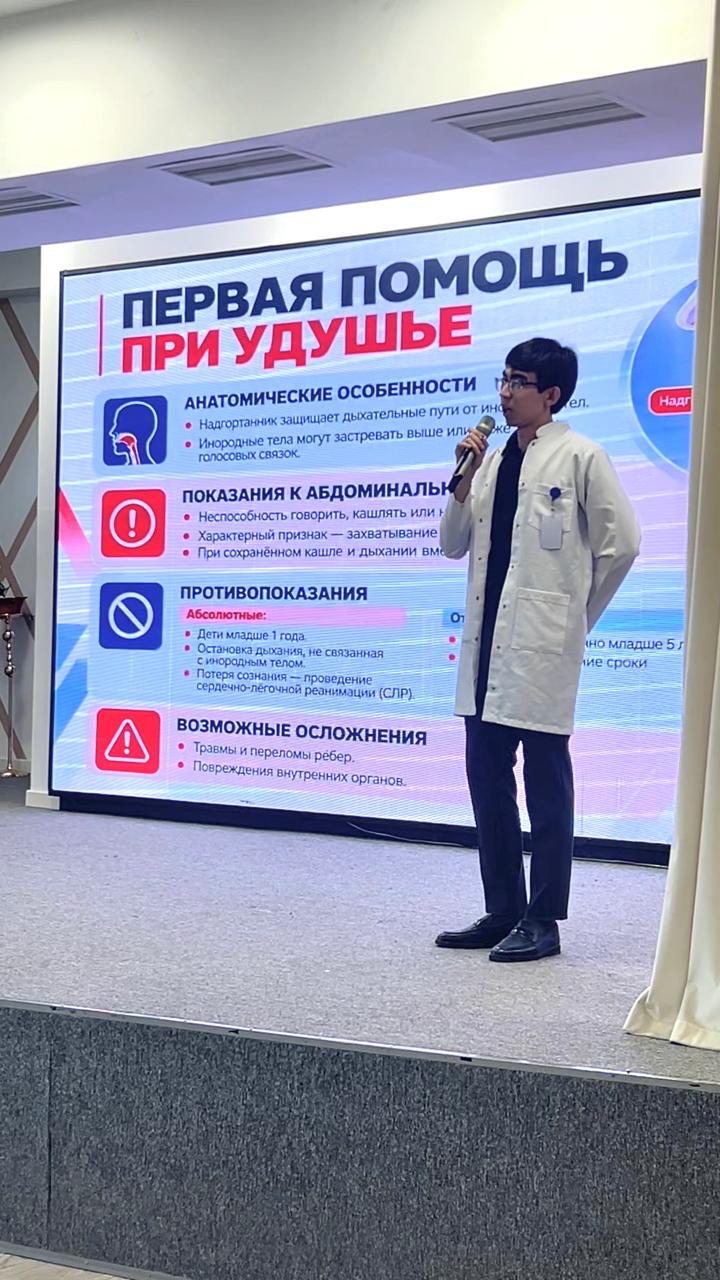
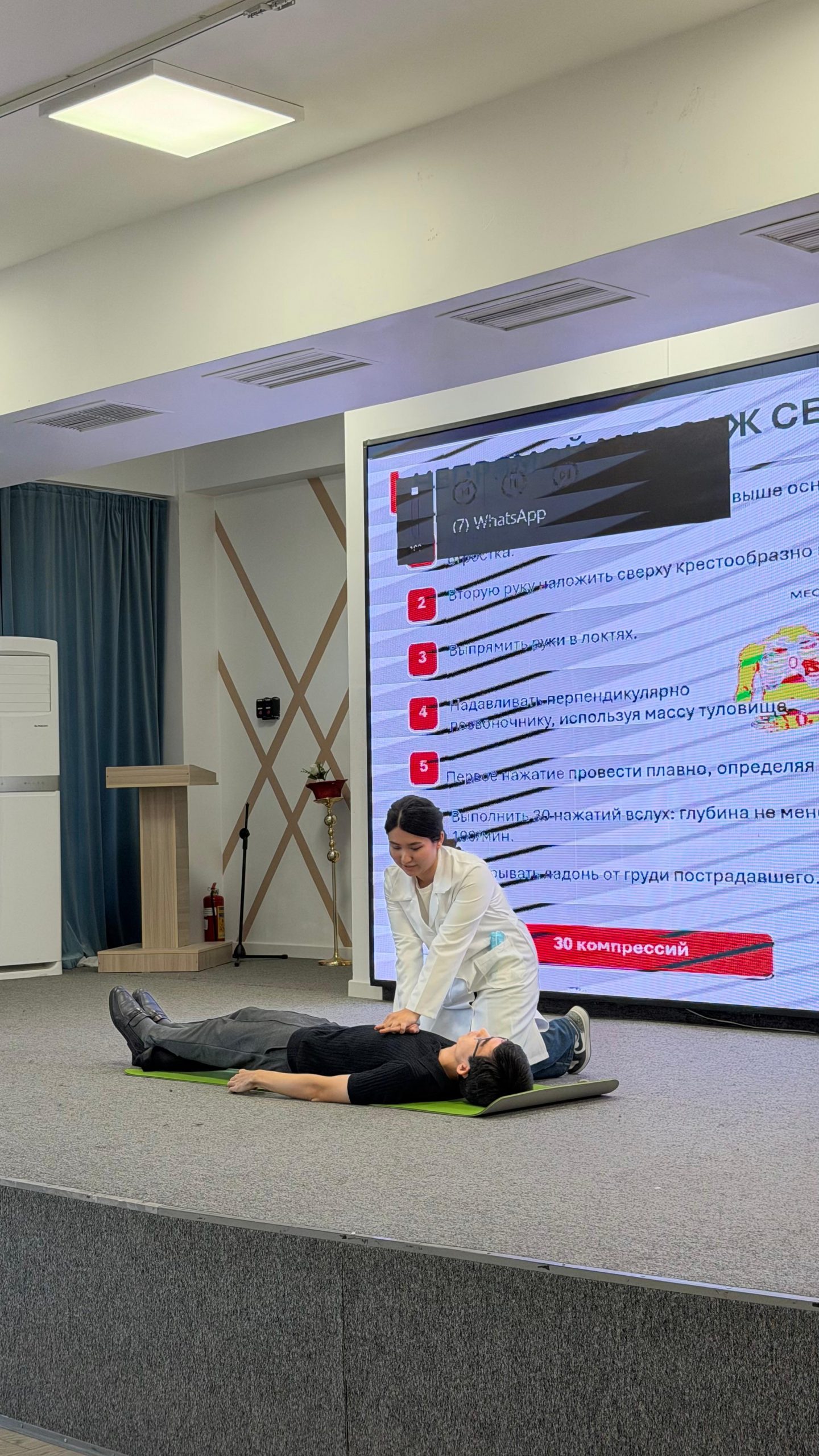
The students were taught how to recognize life-threatening conditions, assess emergency situations, and take appropriate action before medical professionals arrive. The programme covered first aid procedures for cardiac arrest, seizures, stroke, and choking.
The schoolchildren learned about the FAST test for recognizing the signs of stroke, the basic principles of cardiopulmonary resuscitation (CPR), the appropriate response to seizures, and the Heimlich manoeuvre for managing foreign-body airway obstruction.
The lecture was delivered in an interactive format. Students actively asked questions, took part in discussions, and received explanations on topics of particular interest to them. To reinforce the knowledge they had acquired, the residents organized a mini-competition, which generated considerable enthusiasm among the schoolchildren. Participants eagerly took part in the challenge and demonstrated their understanding of the material.
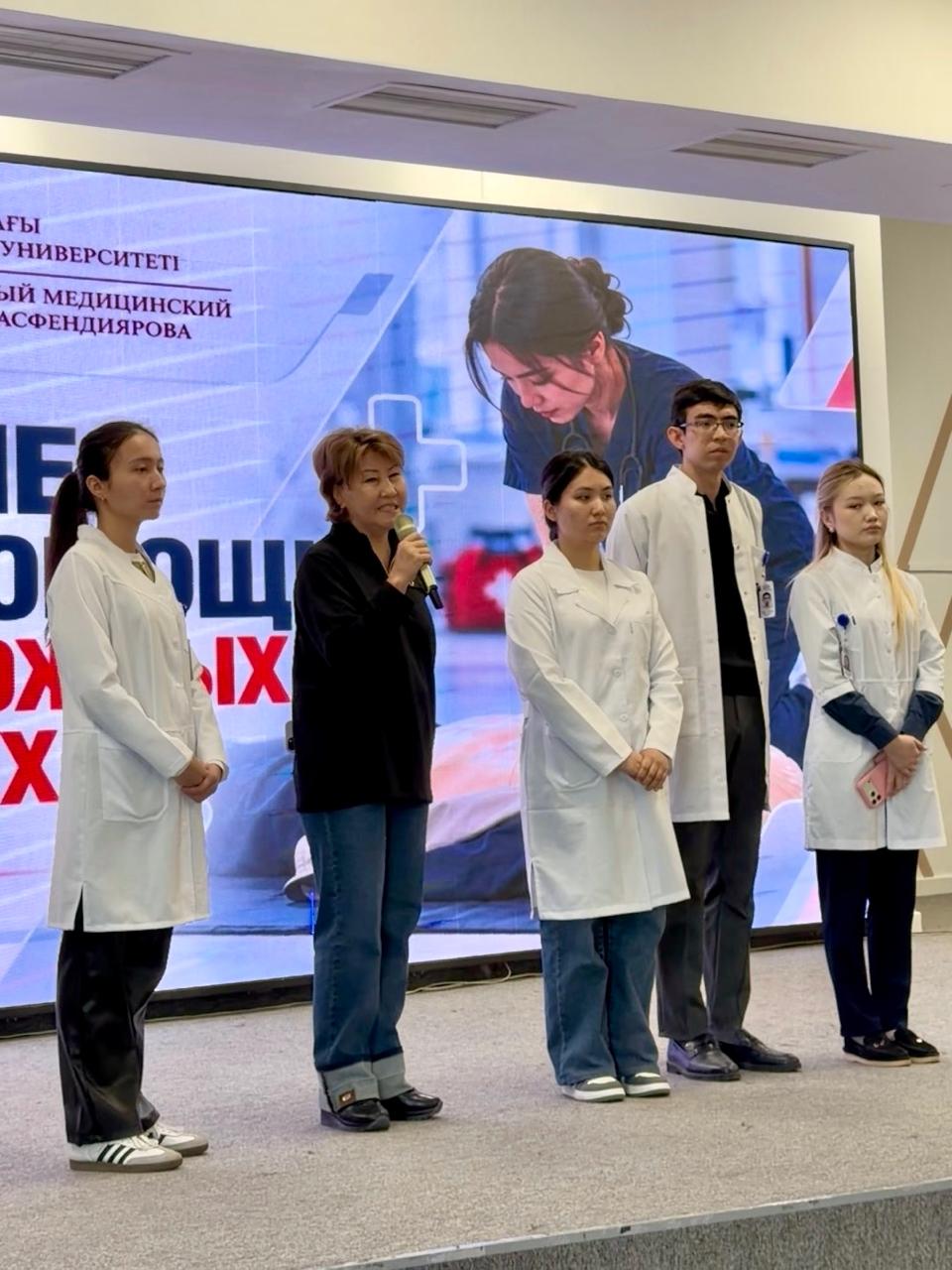
The event was organized and supervised by members of the Department of Nervous Diseases at S. D. Asfendiyarov KazNMU: B. K. Raimkulov, MD, PhD, Professor; B. R. Nurmukhambetova, MD, PhD, Associate Professor; and R. B. Nurzhanova, MD, PhD, Associate Professor and Deputy Head of the Department.
The speakers were first-year residents of the Department of Nervous Diseases: Shakhnoza Rakhmatullo qizi Ochilova, Azamat Almatuly Salykbayev, Mukhlisa Irismatovna Ravshanbekova, and Zhaniya Khamitovna Sattarkulova.
The school administration expressed its sincere gratitude to the residents for their initiative, thorough preparation, and successful delivery of the lecture, emphasizing the importance of such educational activities in equipping schoolchildren with essential first aid skills.
The involvement of young medical professionals in public health education highlights the fact that training a modern physician involves not only acquiring clinical competencies but also developing a willingness to share professional knowledge, improve public health literacy, and contribute to the well-being of society.
Training a modern physician is not only about knowing how to treat patients, but also about being ready to educate society and share knowledge that can save lives.