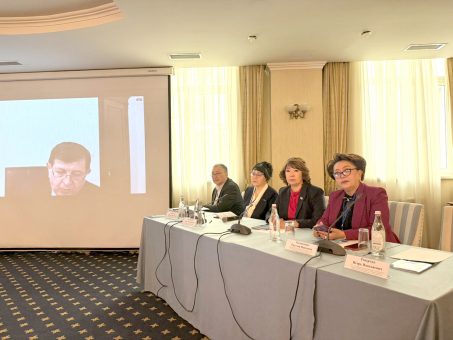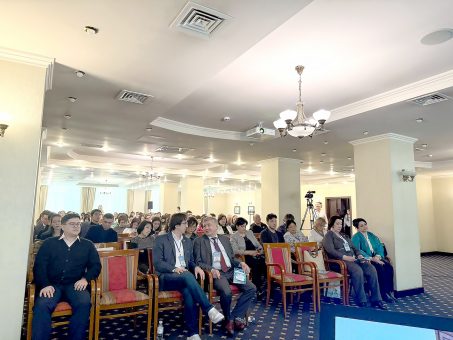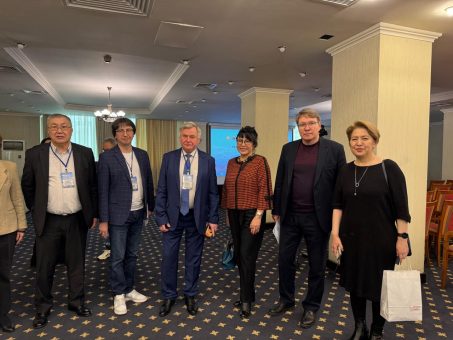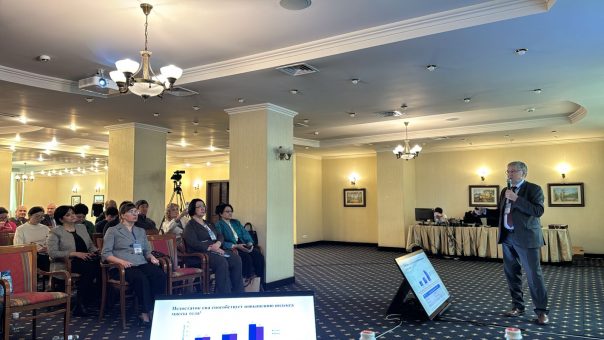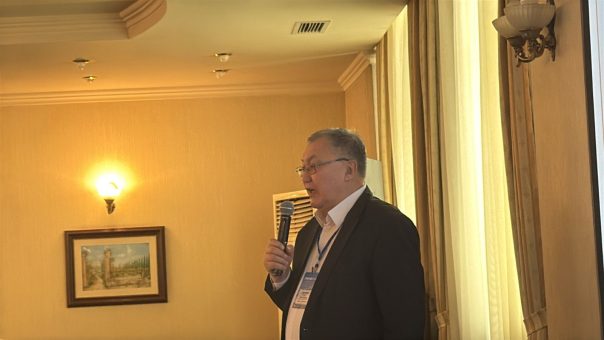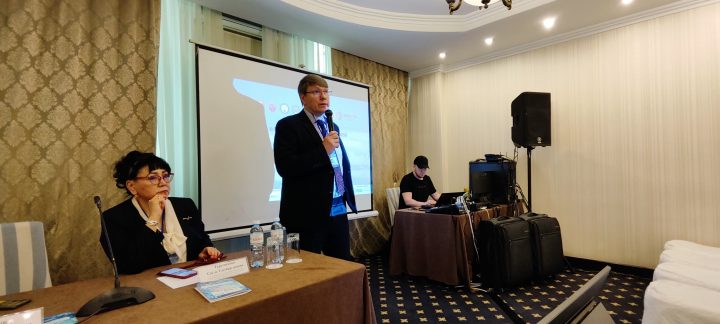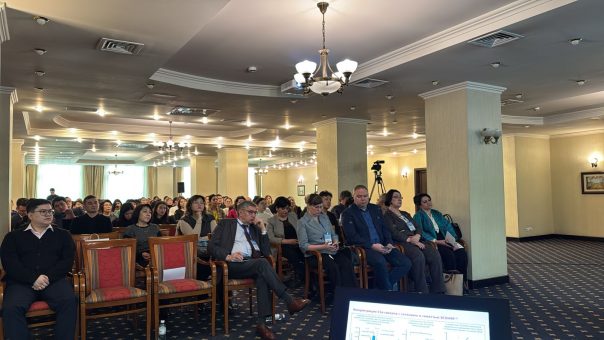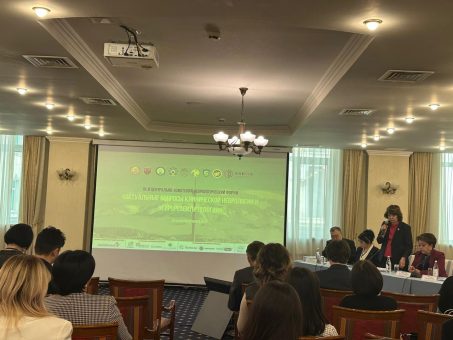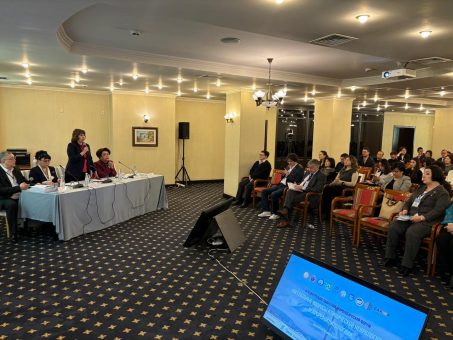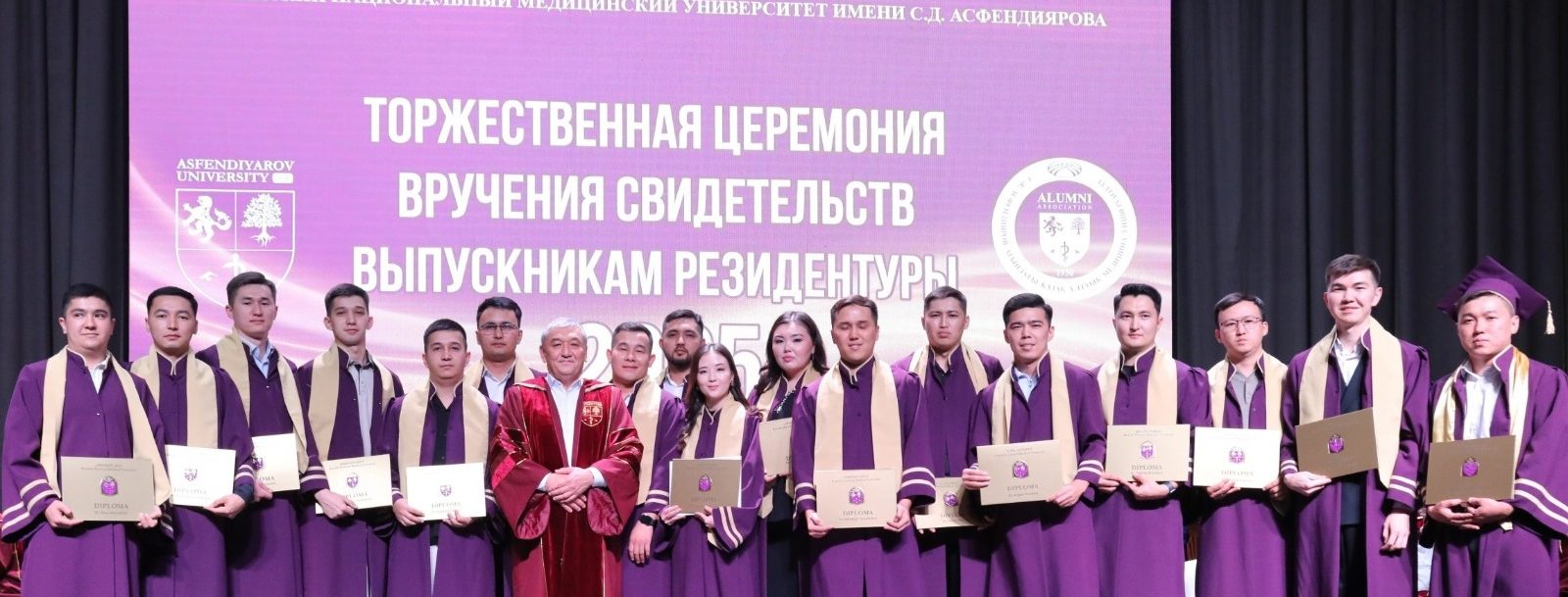
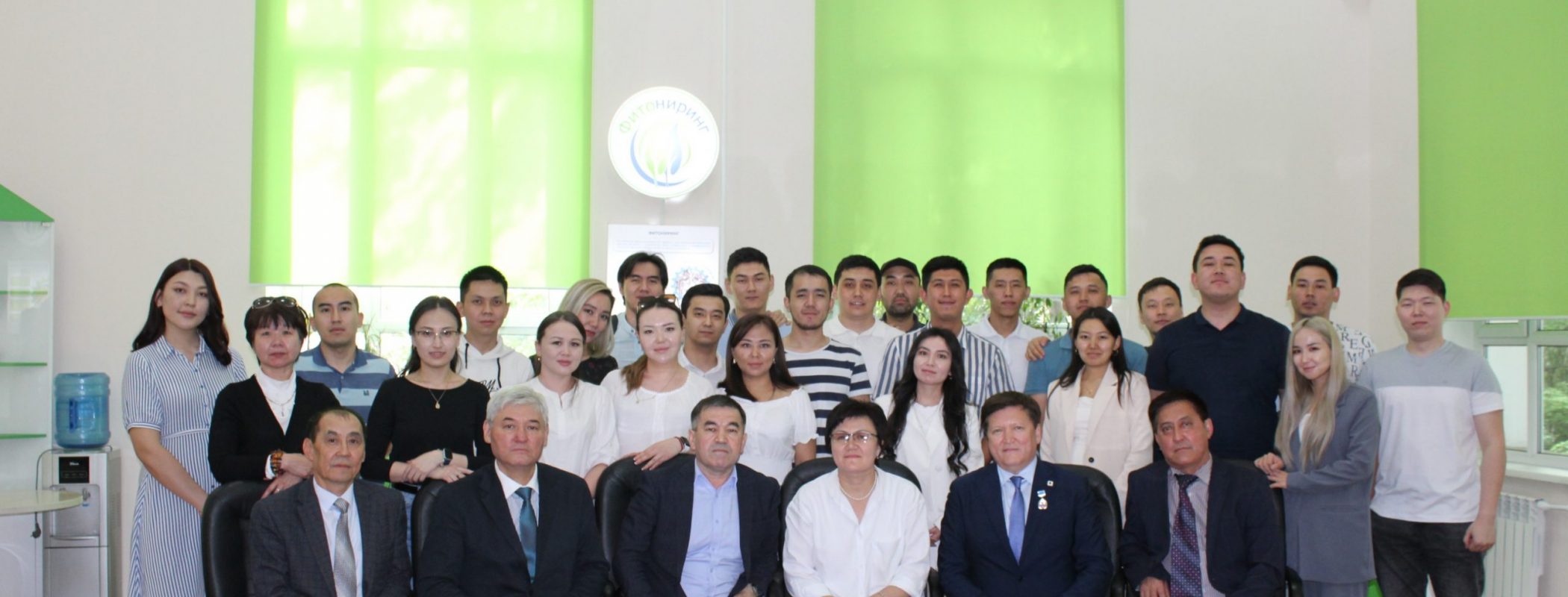
From 28 February to 1 March 2025, the III Central Asian Neurological Forum titled “Topical Issues of Clinical Neurology and Neurorehabilitation” was held in Almaty as part of KazNMU’s 95th anniversary.
The forum brought together leading specialists in neurology, neuropsychiatry, and neurosurgery, becoming a platform for exchanging knowledge and best practices. Organizers included: KazNMU’s Department of Nervous Diseases, the Kazakhstan Neurologists Association, South Kazakhstan Medical Academy, Astana Medical University, as well as medical universities of Uzbekistan and Tajikistan, and the Eurasian Neurologists Association.
Opening Ceremony: The Role of Neurology in Modern Medicine
The forum was officially opened by the First Vice-Rector of KazNMU, academician of the National Academy of Sciences of the Republic of Kazakhstan, Professor Dilyara Radikovna Kaidarova, who emphasized that Kazakhstan is becoming a key platform for international medical cooperation. “Today, the global community faces a major challenge — ensuring high-quality and safe healthcare. Neurological disorders are one of the leading causes of disability and the second leading cause of mortality worldwide. Seventy percent of the total burden falls on low- and middle-income countries. Our forum is not just a meeting of specialists but a contribution to the global initiative on preserving brain health,” Kaidarova noted.
The rector of the Bukhara Medical Institute named after Abu Ali Ibn Sina, Sh.Zh. Teshaev, highlighted the importance of joint scientific research, emphasizing that only by uniting efforts it is possible to achieve breakthrough results in the treatment of neurological diseases.
Participants were also welcomed by the President of the Kazakhstan Neurologists Association, Professor E.S. Nurguzhayev; the Chief Freelance Neurologist of the Ministry of Health of the Republic of Kazakhstan, S.T. Turusphekova; the Chief Freelance Neurologist of Uzbekistan, Professor E.N. Madjidova; as well as representatives of leading medical schools of Central Asia.
Main Topics and Participation of Leading Neurologists
The forum became a platform for discussing new approaches to diagnosing, understanding the pathogenesis, and treating neurological diseases. More than 5,000 online attendees and around 200 specialists in Almaty participated in the hybrid-format event.
At the plenary sessions, leading neurologists of Kazakhstan delivered presentations:
- Professor E.S. Nurguzhayev (Almaty)
- Professor S.T. Turusphekova (Almaty)
- Professor T.N. Khaibullin (Semey)
- Professor L.E. Eszhanova (Astana)
- Professor N.A. Zharkynbekova (Shymkent)
- Professor R.B. Nurzhanova (Almaty)
- Professor G.A. Mukhambetova (Almaty)
- Professor L.B. Kuanova (Astana)
- Professor K.S. Zhanzhigitov (Astana)
Speakers from Uzbekistan:
- Professor Yo.N. Madjidova (Tashkent)
- Professor Z.F. Mavlanova (Samarkand)
- Professor E.M. Mirdzhurayev (Tashkent)
- Professor M.A. Artykova (Bukhara)
- Professor M.N. Badritdinova (Bukhara)
Speakers from Tajikistan:
- Professor M.T. Ganieva (Dushanbe)
Speakers from Kyrgyzstan:
- Professor F.A. Yusupov
- Professor M.Sh. Abdykadyrov (Osh)
Speakers from the Russian Federation:
- Professor D.S. Kasatkin (Yaroslavl)
- Professor S.M. Karpov (Stavropol)
- Professor T.A. Gavrilova (Samara)
- Professor Yu.V. Karakulova (Perm)
- Professor E.R. Barantsevich (Saint Petersburg)
- Professor A.E. Barulin (Volgograd)
- Professor O.V. Kurushina (Volgograd)
- Professor A.G. Shakarov (Nizhny Novgorod)
- Professor M.V. Zhaburina (Ivanovo)
From Belarus:
- Professor E.V. Tarasevich (Minsk)
Regional Session and Future Prospects
Within the framework of the forum, a regional session titled “School of the Practicing Physician: Diagnostics, Pathogenesis, and Treatment of Certain Neurological Disorders” was held in the conference hall of the Bukhara Medical Institute under the leadership of Professor D.T. Khodzhieva. The session gathered more than 50 participants, demonstrating a high level of involvement from practicing physicians.
The World Health Organization identifies the protection of brain health as one of the key directions for the development of 21st-century medicine. The “One Brain, One Life, One Approach” strategy aims to build a comprehensive system for preventing, diagnosing, and treating neurological diseases.
The III Central Asian Neurological Forum confirmed a high level of international cooperation and laid the foundation for new scientific and clinical developments. The creation of an open unified platform for knowledge exchange allows for the improvement of diagnostic, treatment, and prevention methods in neurology, as well as the strengthening of international partnerships in the healthcare sector.