Asfendiyarov Kazakh National Medical University (KazNMU) has once again confirmed its high standing within the global medical community. For the first time in the history of Kazakhstan, the Department of Allergology and Clinical Immunology, operating on the basis of the Allergology Unit of the Primary Health Care and Diagnostics Centre and led by Professor Zhannat Bakhytovna Isspayeva, has successfully undergone an international audit covering three allergic diseases simultaneously and has been awarded accreditation by the European Academy of Allergy and Clinical Immunology (EAACI). This achievement has enabled the department to join the prestigious GA²LEN (Global Allergy and Asthma European Network), which brings together leading clinics and scientific schools worldwide.
The international audit was conducted by Professor Maia Gotua, a globally recognised expert in allergology and clinical immunology, Head of the UCARE, ADCARE, ACARE and ANACARE centres in Tbilisi, President of the Georgian Academy of Allergy, Asthma and Clinical Immunology, National ARIA Coordinator, GOLD Leader and GINA Advocate. Over the course of five hours, the department’s staff demonstrated their professional expertise, clinical practices and educational programmes. The outcome was highly positive: the Allergology Unit of the KazNMU Primary Health Care and Diagnostics Centre was certified by EAACI and officially included in the GA²LEN network as an international specialised centre in three areas: urticaria (UCARE), atopic dermatitis (ADCARE) and hereditary angioedema (ACARE).
UCARE represents the world’s largest global consortium dedicated to the study and management of urticaria, integrating best international practices in diagnosis and treatment. KazNMU’s inclusion in this network confirms that its clinical, scientific and educational activities fully comply with the highest international standards. ACARE объединates leading centres specialising in hereditary angioedema and serves as an international platform for expert collaboration. ADCARE focuses on the management of complex forms of atopic dermatitis, the implementation of personalised treatment approaches and the advancement of scientific research.
This development is of strategic importance for Kazakhstan. Membership in international reference centres creates wide-ranging opportunities, including participation in global clinical trials, the introduction of innovative diagnostic and therapeutic methods, contribution to the development and revision of international clinical guidelines, and engagement in leading global congresses and educational initiatives. For patients, this ensures access to state-of-the-art treatment, while for young specialists it provides opportunities to train and work in line with international best practice.
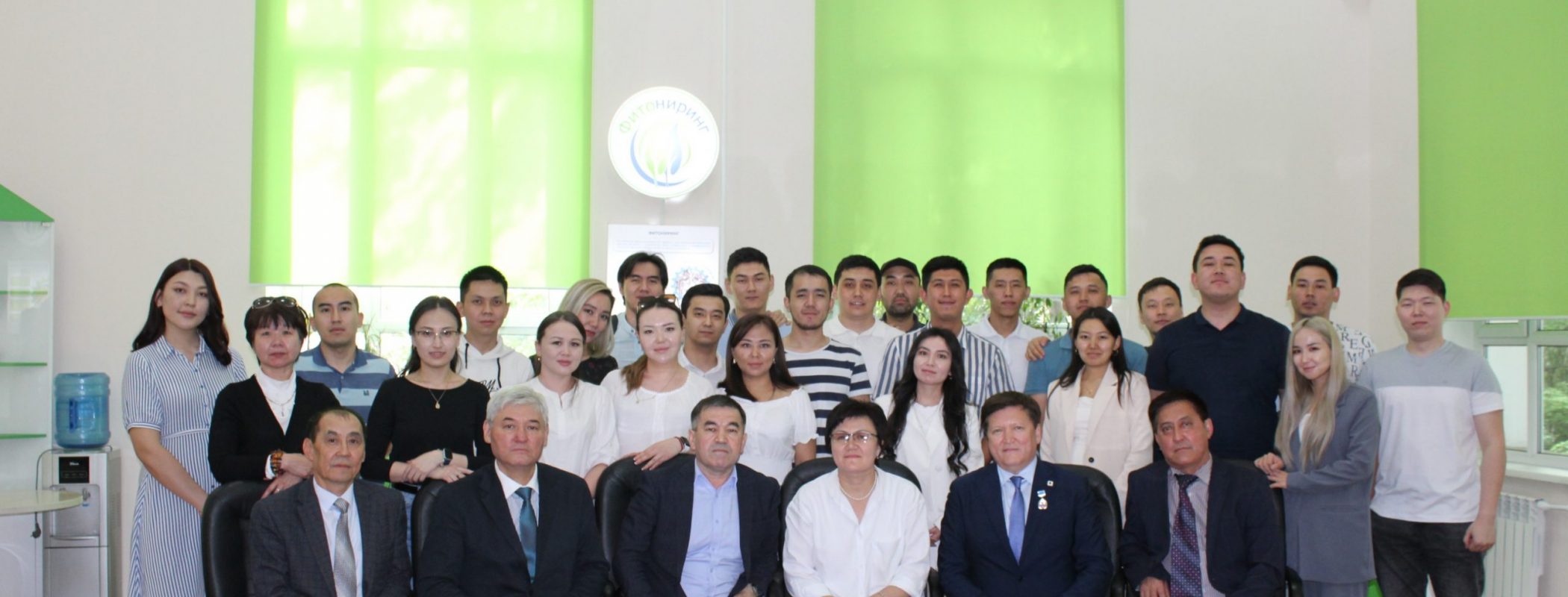
Preparation for the international audit was carried out by the department team under the leadership of Professor Isspayeva. The process involved academic staff members Bekmagambetova R.B., Seitbattalova A.E. and Sarsenbayeva A.Zh., as well as second-year residents Ashurbekova K.T., Zhumash M.S. and Turganbayev A.B. The international expert highlighted the high level of theoretical knowledge and practical skills demonstrated by Kazakh specialists, noting that the educational and clinical approaches presented are fully aligned with leading global standards.
A particular highlight of the visit was a master class delivered by Professor Maia Gotua. Her joint discussion with Professor Isspayeva developed into a substantive intellectual exchange, rich in ideas and practical recommendations. Young members of the department gained invaluable experience and direct insight from a recognised international authority in the field.
“All our achievements are directed towards improving patient care,” Professor Isspayeva stated. “Our objective is to ensure that patients in Kazakhstan have access to the most advanced treatment methods, innovative medicines and modern clinical approaches. International accreditation opens significant opportunities for participation in scientific projects, clinical research and collaboration with leading European centres. This recognition is the result of the collective efforts of the entire team, including young specialists and residents. We have demonstrated full compliance with international standards and shown that Kazakhstan is an integral part of the global medical community.”
Professor Isspayeva also emphasised that interest from international partners in Asfendiyarov KazNMU remains consistently high. This is evidenced by the increasing number of international clinical studies conducted by the Department of Allergology and Clinical Immunology across a wide range of areas. It is therefore no coincidence that this department has been selected as the principal investigator for numerous international projects involving leading European countries and the United States.
At present, the department is successfully implementing research projects addressing the most pressing challenges in allergology. For the second consecutive year, an international clinical study on allergen-specific immunotherapy (ASIT) using tree and plant pollen has been underway. The agreement with KazNMU covers a five-year period from 2023 to 2028, with sponsorship provided by the German company Roxall. In the coming year, the project will continue using a grass pollen mixture, while a separate five-year study involving house dust mite allergens—one of the most common causes of severe bronchial asthma-is approaching completion.
In addition, the department has completed a clinical study on atopic dermatitis, and in 2026 a large-scale international study on hereditary angioedema, a serious inherited condition requiring new therapeutic approaches, is planned. The project will involve 14 leading European countries in collaboration with the United States and the United Kingdom. The study sponsor is the Austrian pharmaceutical company Octapharma.
According to Professor Isspayeva, such initiatives confirm the increasingly central role of university clinics, as observed in leading European universities. University hospitals consolidate scientific expertise and clinical experience, while clinical research represents a critical stage in the lifecycle of modern medicine.
“We are building a model of future healthcare,” Professor Isspayeva concluded. “A university hospital is not merely another healthcare institution; it represents a new philosophy of medical care. It transforms approaches to patient management, enhances the role of healthcare professionals and creates an environment for the education of doctoral candidates, residents and students. The international clinical trials we conduct constitute an essential component in establishing a centre of last resort, equipped with advanced technologies, modern infrastructure and highly qualified medical professionals.”
In summary, EAACI accreditation and inclusion in the GA²LEN network represent not only recognition of the high professional standards of the KazNMU Department of Allergology and Clinical Immunology, but also a natural continuation of its active integration into the global scientific community. The international research projects currently being implemented at the university clinic strengthen Kazakhstan’s position on the global medical landscape and open new opportunities for patients, healthcare professionals and medical science.
